s h o r t f o l i o . . .


https://farm6.staticflickr.com/5580/14769093690_4cb4c5afa8_o.jpg
                   
That's only my listed, work in progress and practice personal work, others are not to be published due to copyright ownership.
Showing posts with label INTERIOR DESIGN. Show all posts

Saturday, January 17, 2026

Circles and Grids . . .

Layered textures emerge through structured geometry, where circles and grids intersect like fragments of weathered surfaces. The contrast between smooth geometric precision and rough, tactile finishes creates a quiet tension—suggesting balance between order and erosion, design and time. 

#zdesignworks #abstractart #abstract #WallMural #gradient 

Geometry of Time - Precise circular and linear structures are juxtaposed with weathered textures, proposing time as an active force within geometric systems. The composition reflects permanence challenged by gradual transformation.

“Geometry of Time”

Suggests the effect of time and erosion embedded within ordered forms.


Friday, January 9, 2026

Interplay of geometry . . .

A refined interplay of geometry and surface texture, where layered plaster-like finishes add depth and tactility to clean, structured forms. The intersecting lines and bold circular element are softened by subtle imperfections, creating a balanced dialogue between precision and organic texture within a contemporary abstract composition. 

Textured Intersections - An abstract study of crossing planes and lines, emphasizing the tactile quality of layered materials as they meet within a structured geometric framework.

“Textured Intersections”


Architectural Abstraction - An artwork inspired by architectural principles, using geometric order and material texture to suggest constructed space without literal representation.

Layered Equilibrium - A composition that explores balance through stacked textures and intersecting geometric forms, where visual weight is distributed evenly across contrasting surfaces.

“Architectural Abstraction”

“Layered Equilibrium”

Constructed Horizons - A reference to horizontal divisions and architectural order, where textured fields suggest depth, distance, and a man-made sense of spatial organization.

Geometry in Relief - A tactile interpretation of geometric abstraction, highlighting raised and weathered surfaces that transform flat shapes into dimensional expressions.

Surface Dialogue - An interaction between smooth geometry and rough texture, presenting a visual conversation between control and imperfection across the composition.

“Constructed Horizons”

“Geometry in Relief”
  
“Surface Dialogue”

Strata and Symmetry - A layered arrangement of textures and forms that reflects natural stratification while maintaining compositional symmetry and structural clarity.

Tactile Convergence - A focal merging of lines, shapes, and textured surfaces, drawing attention to the physicality of the medium and the point where elements visually unite.

“Strata and Symmetry”

“Tactile Convergence”

Tuesday, November 25, 2025

How much do i charge in Dubai for Interior design consultation including space plan assessment, design ideas plus artwork selection, furniture and accessories recommendation...


In Dubai, you can charge for an interior design consultation using several models, with typical rates ranging from AED 200 to AED 500 per hour or a fixed fee of AED 5,000 to AED 20,000 for a full design phase. The specific services you listed (space plan assessment, design ideas, artwork selection, and furniture/accessories recommendation) often fall under these general pricing structures. 


Common Pricing Models in Dubai


You have several options for how to structure your fees for the requested services:

Hourly Rate: This model is suitable for consultations and smaller, well-defined scopes of work. Rates generally fall between AED 200 and AED 500 per hour, but can reach up to AED 1,000+ for high-end or highly experienced designers in premium areas.


Fixed Fee (Per Project/Room): This provides cost certainty for the client and is popular for clearly defined projects. A single-room design fee might range from AED 5,000 to AED 25,000, while a larger scope (like a full apartment) could be AED 25,000 to AED 75,000+.


Per Square Meter/Foot: This is a common method for full-scope projects in Dubai. The fee typically covers the design and planning phase, but not the actual materials or implementation.


Per Sq. Meter: Expect to charge between AED 200 and AED 1,000+ per square meter, depending on the level of luxury and complexity.

Per Sq. Foot: The range is typically AED 75 to AED 400 per square foot for residential projects.


Percentage of Total Project Cost: For larger or more complex projects, you might charge 10% to 20% of the total budget for design services and project management.

Consultation Packages: For an initial, low-commitment consultation including the services you mentioned, some designers offer a half-day package for around AED 2,500. 


Key Factors Influencing Your Rate


The ideal price to charge will depend on several factors:


Your Experience and Reputation: More established designers with a strong portfolio can command higher fees.


Scope of Work Clarity: A clearly defined scope helps in setting a fixed fee. Be explicit about the number of revisions included to avoid scope creep.


Project Size: Larger spaces often result in higher overall fees, even if the per-square-meter rate is slightly lower.


Client Expectations: High-end clients expecting bespoke designs, imported materials, and extensive project management will pay premium rates.


Included Services: Clearly outline that your fee covers the consultation, design, and recommendations, and that the actual cost of purchasing furniture, artwork, and accessories is separate (though you might add a 10-30% markup on procured items if you handle purchasing). 


To determine the most appropriate price for your services, consider the specific details of the project and choose the pricing model that best aligns with the project's complexity and your business model.


____


For an interior design consultation in Dubai that includes space planning, design ideas, and furniture/artwork recommendations, you can charge between AED 200 and AED 500 per hour for an hourly rate, a fixed fee of AED 5,000–20,000, or a consultation fee of approximately AED 500–1,000 per hour or AED 2,500 for a half-day. The final price depends on the designer's experience, the project's complexity, and the scope of services. 

Pricing models and rates :

Hourly Rate: AED 200–500 per hour. This is a good model for smaller projects or for clients who only need quick advice.

Fixed Fee: AED 5,000–20,000 for the design phase. This model provides a predictable cost for the client and can be calculated based on the estimated time spent on the project.

Consultation Fee: AED 500–1,000 per hour for a consultation, or AED 2,500 for a half-day session. Some designers may offer a free initial consultation, especially for residential projects up to a certain size.

Per-Square-Foot/Meter: For residential projects, designers often charge around AED 75–400 per square foot or AED 200–400 per square meter for basic design services. 


Factors influencing cost :

Experience and Reputation: More experienced and well-known designers typically charge higher fees.

Project Scope: The complexity of the project, such as a single room versus a full villa, will significantly affect the price.

Timeline: A project with a tight deadline may incur a rush fee. 


Saturday, July 26, 2025

Art aesthetics and Interior ambience . . .

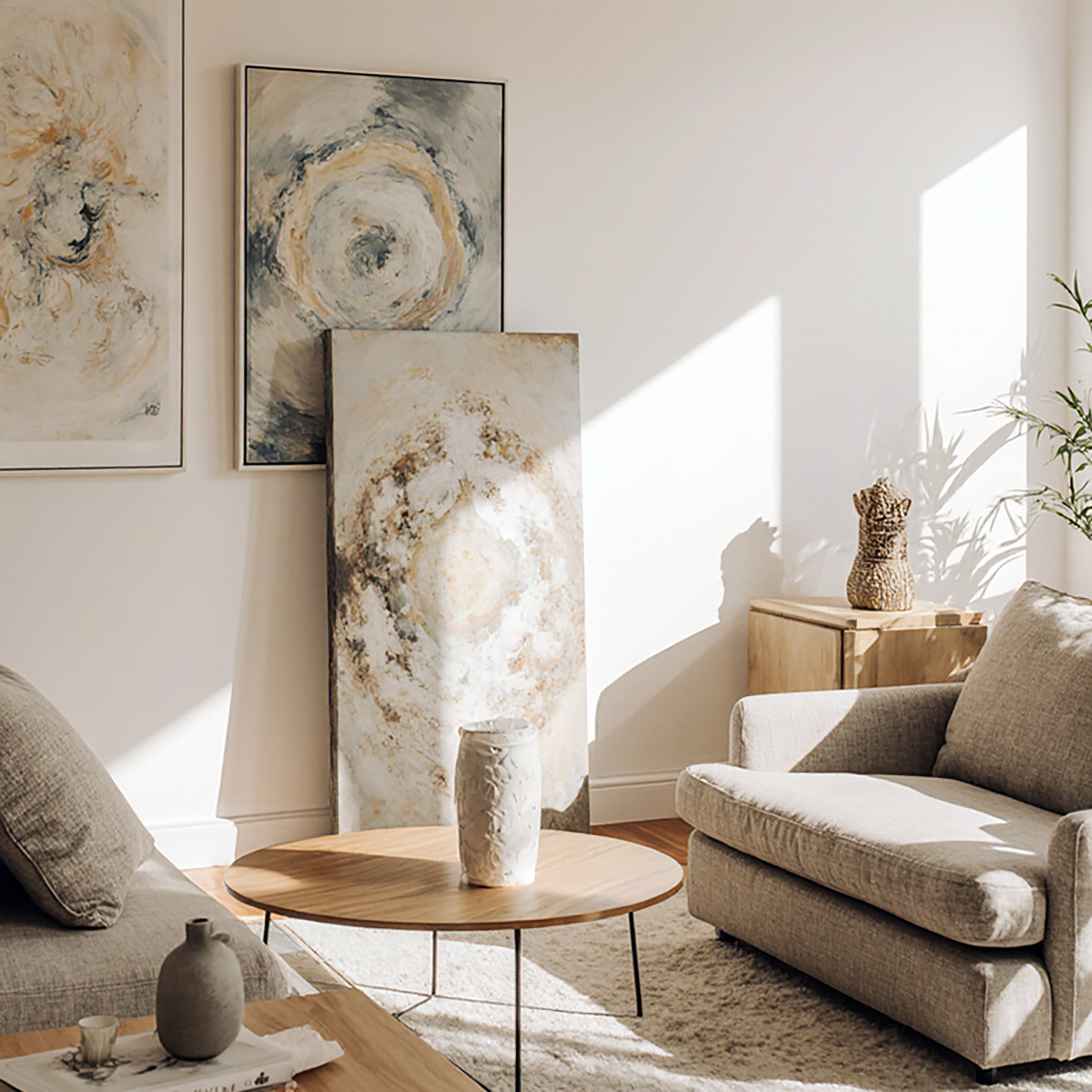
Art aesthetics and interior ambience are deeply intertwined—art doesn't just occupy a space; it shapes its emotional and sensory tone. When thoughtfully integrated, artwork becomes a silent architect of atmosphere, subtly guiding how a room feels through color, form, texture, and narrative. Whether it's a minimalist painting in a serene lounge or an abstract sculpture in a dynamic foyer, the aesthetic choices in art echo throughout the interior, creating harmony, contrast, or tension that defines the space's identity and mood.


Here's a more detailed look at their relationship:


Art's Role in Interior Ambience:


Setting the Tone:

Art can establish the mood and atmosphere of a room, whether it's a calming landscape for a bedroom or a vibrant abstract piece for a living area. 


Adding Depth and Texture:

Art, through various mediums like paintings, sculptures, or textiles, introduces visual and tactile interest, preventing a space from feeling flat or sterile. 


Evoking Emotion and Narrative:

Art has the power to evoke feelings and tell stories, making a space more meaningful and engaging. 


Reflecting Personality:

Art choices can reflect the occupant's tastes, values, and cultural background, making the space feel personal and authentic.


Interior Design's Role in Displaying Art:


Providing Context:

The overall design of a space, including its colors, furniture, and lighting, provides the context within which art is viewed and appreciated. 


Creating Harmony and Balance:

Interior design principles like balance, harmony, and contrast are also relevant to art, and aligning these principles can create a cohesive and visually appealing space. 


Highlighting Focal Points:

Strategic placement of art can create focal points, drawing attention to specific areas within a room. 


Enhancing the Overall Experience:

The ambience of a space, including its acoustics, lighting, and scent, also plays a role in how art is perceived and appreciated, contributing to the overall experience. 


Considerations for Choosing Art for Interior Spaces:


Room Function:

Consider the purpose of the room when selecting art. For example, a calming landscape might be suitable for a bedroom, while a vibrant abstract piece could be ideal for a living room. 


Personal Style:

Choose art that reflects your personal taste and preferences, ensuring that the space feels authentic and reflects your personality. 


Color Palette:

Coordinate the colors of the art with the existing color scheme of the room to create a sense of harmony and balance. 


Size and Scale:

Ensure that the size and scale of the art are appropriate for the space and the furniture it will be displayed with. 


Lighting:

Pay attention to the lighting in the room and how it will affect the appearance of the art. 


By carefully considering both art aesthetics and interior ambience, you can create spaces that are not only 
visually appealing but also evoke emotion, tell stories, and reflect the unique personality of the occupants.